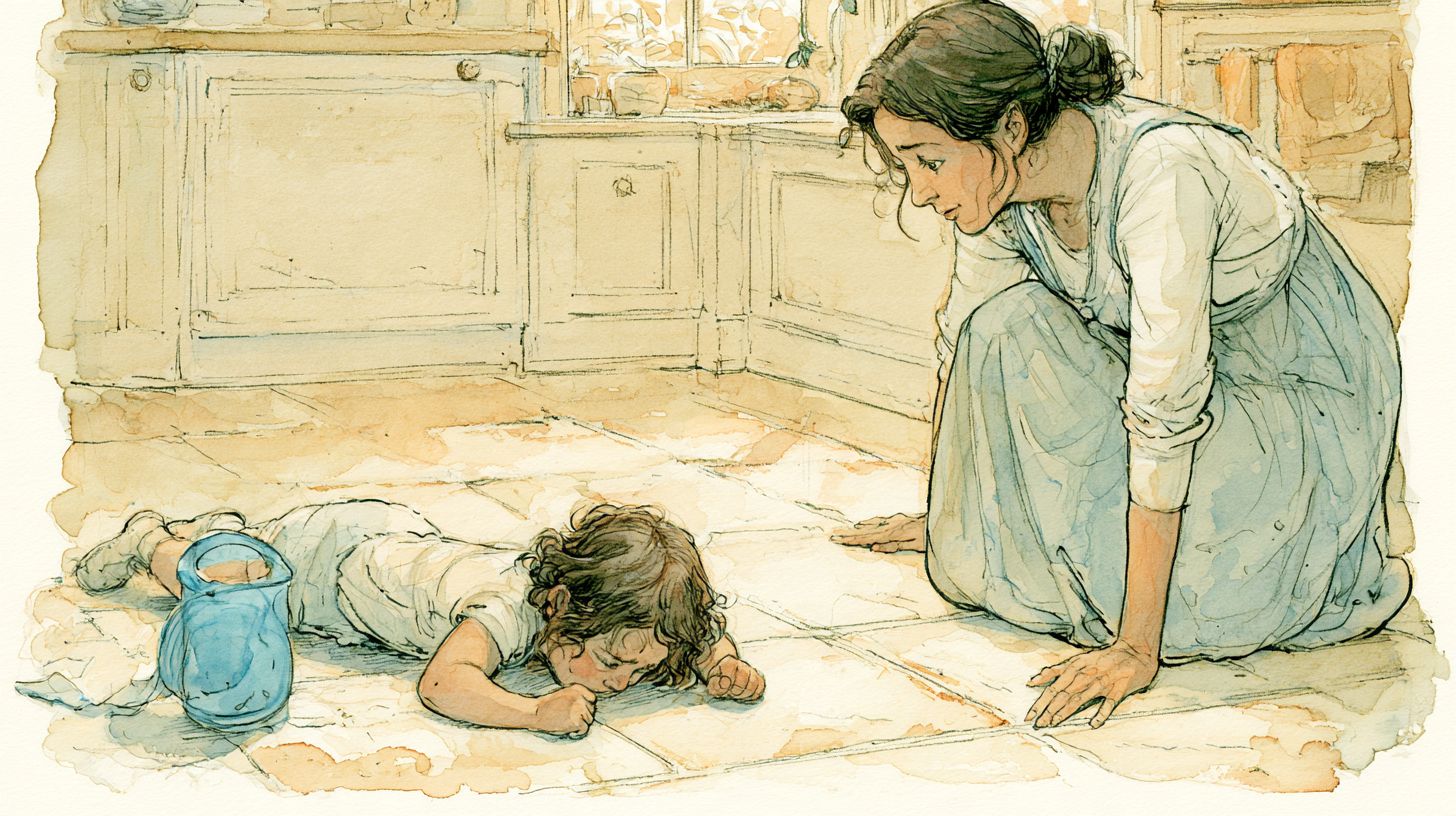
Most temper tantrums are a normal part of growing up. They peak between ages one and three, and fade as language and self-control catch up. A few patterns are not typical, including hurting themselves, violence in most tantrums, and more than five a day for several days, and those are the signs to call your pediatrician.
Your child asked for the blue cup, you handed over the blue cup, and now they are face down on the kitchen floor screaming because it is the wrong blue cup. If you are searching "temper tantrums" at the end of a day like that, this page covers what is typical at each age, what to do in the moment, and when to get help.
What a tantrum is and why it happens
A tantrum is a short burst of crying, yelling or physical protest when a young child is frustrated, angry or upset. It can include screaming, throwing themselves on the ground, hitting, kicking or biting. The American Academy of Child and Adolescent Psychiatry describes tantrums as normal for young children and equally common in boys and girls.
Underneath almost every tantrum is the same problem. Your child wants something, or wants something to stop, and does not yet have the words or the brakes to handle the gap. A tantrum is communication with the volume turned all the way up.
What is normal at each age?
- Ages 1 to 3: tantrums usually start somewhere between 12 months and 3 years and can happen at least once a day. For toddlers, a tantrum typically lasts anywhere from 2 to 15 minutes.
- Ages 3 to 5: tantrums are still common but daily tantrums become less common after age 3, and they rarely last longer than 15 minutes.
- After 5: tantrums become rare. Older children who still struggle to put frustration into words can have them, just much less often.
Being tired, hungry, sick or overstimulated makes tantrums more frequent at every age. Personality matters too. One child in a family may tantrum far more than a sibling, and that is not a sign you gave one less attention.
What to do during a tantrum
- Keep everyone safe first. Move your child, or move breakable things, away. Safety is the only goal while the storm is at its peak.
- Stay calm and say less. A dysregulated child cannot take in a lecture. Short, steady words work better: "I'm here. You're safe. I'll wait."
- Don't give in to the demand that started it. If the tantrum gets the cookie, the next tantrum gets louder. You can be warm and still hold the line.
- Offer small choices once things start to settle. The American Academy of Pediatrics suggests giving your child control over little things, such as "Do you want to sit on the couch or on my lap?" rather than yes or no questions.
- Never spank. The AAP is clear that spanking teaches a child that it is fine to act aggressively when upset.
- Reconnect afterward. When it is over, it is over. A hug and a simple name for the feeling ("You were so mad the cup was wrong") builds the words your child needs to need tantrums less.
While you're here, take the guide
What's Underneath is free: the three body-state triggers under most meltdowns, what to say in the minute before it tips over, and how to reset afterward.
You'll get the guide instantly, plus five free articles in your inbox every week. Real challenges (meltdowns, school mornings, picky eating, big feelings) and how to actually handle them. Unsubscribe anytime.
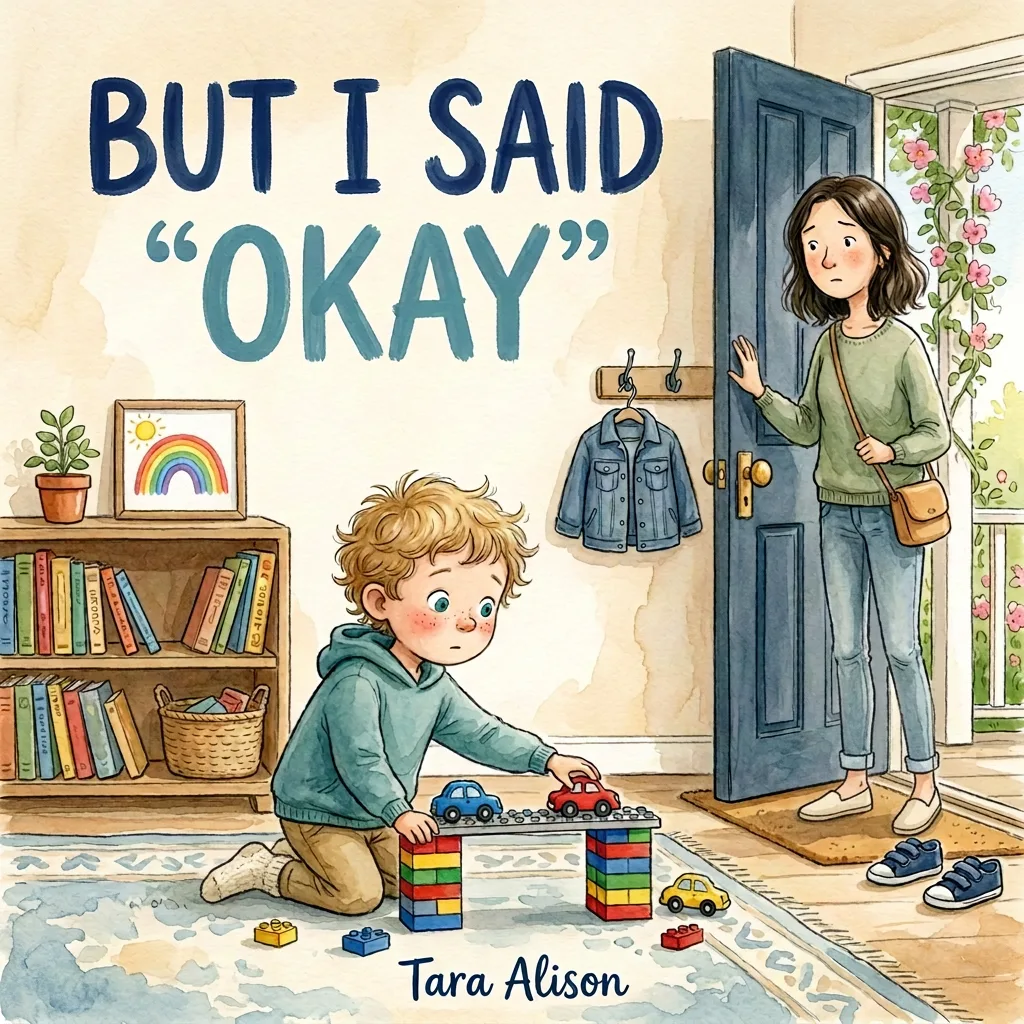
There's a story for this exact struggle
But I Said “Okay”
Owen always says okay. He means it every time. But his attention is still inside the bridge, the dragon, the cave, the music — until Mom realizes that helping him leave one thing matters more than asking him to start the next.
Free to read. You'll also get five free articles a week. Unsubscribe anytime.
Ways to make tantrums less frequent
You will not prevent all of them, and you are not supposed to. You can make them less frequent:
- Protect sleep and food. Plan errands around naps and pack snacks.
- Warn before transitions. "Two more slides, then shoes." Sudden stops are one of the most common triggers.
- Say yes when you can. Save your no for things that matter, so it means more.
- Notice your child's pattern. Tantrums are rarely random. They cluster at the same times, places and demands.
Transitions are such a common trigger that we wrote a whole story about them. But I Said Okay follows a child who agrees to leave and then falls apart anyway, and it gives you and your child shared words for the hard part of stopping.
When is a tantrum not just a tantrum?
Researchers at Washington University compared the tantrums of nearly 280 preschoolers, some healthy and some with depression or disruptive behavior disorders such as ADHD. Healthy children did sometimes have big tantrums, especially when tired or sick. But a few patterns showed up far more in children with an underlying problem:
- Hurting themselves during tantrums, such as head-banging, biting themselves or scratching until the skin bleeds
- Violence toward people or objects during most tantrums
- More than five tantrums a day for several days in a row
- Very long tantrums, well beyond what is typical for their age
- Being unable to calm down without help, or needing a bribe every time
Medical guidance adds a few more reasons to call your pediatrician: tantrums that get worse after age 4, breath-holding that leads to fainting, or tantrums alongside other worries such as sleep, eating or development.
Also look at what the tantrum is made of. A tantrum is usually aimed at a goal and stops when the goal is met or clearly off the table. A meltdown is a nervous system overload, and it does not stop just because the demand goes away. Our guide to meltdowns versus tantrums walks through the difference, and tantrums versus sensory overload covers what to look for when noise, clothing or crowds set things off. Sudden changes in behavior after an illness are a separate question to raise with a doctor.
Track the pattern for a week or two
Write it down. For a week or two, note what happened right before, how long it lasted, what helped and what made it worse. Patterns you cannot see in the middle of a hard day become obvious on paper, and they are what a pediatrician will ask about first.
This is what LightMap was built for. Log a hard moment in under a minute, and LightMap shows you what keeps setting it off, what actually helps your child calm down, and how to respond next time. If you ever need to talk to a doctor, you walk in with a clear record instead of a blur of bad afternoons. Start free at LightMap.
Tantrums are loud, and they can make you doubt yourself in the middle of a grocery store. Most of the time they mean your child is growing right on schedule and still learning how to handle big feelings. Your calm is what they borrow while they learn.
Start here
Find out what's really going on
The quiz points you toward what's driving it and what tends to help.
Take the quizOr get a free 15 minute LightMap Analysis with TaraFree. No card. 15 minutes.
 Not sure where to start? Ask me.Message Tara on WhatsApp. It really is me, I read everything and will personally respond.Click here to message Tara →

Part of the award-winning Birch & Light Method, honored with the Mom's Choice Gold Award for excellence in family resources.
Sources
Sources: American Academy of Child and Adolescent Psychiatry, "Temper Tantrums," Facts for Families No. 136, June 2025. MedlinePlus Medical Encyclopedia, "Temper tantrums," U.S. National Library of Medicine. Swanson WS, "Top Tips for Surviving Tantrums," HealthyChildren.org, American Academy of Pediatrics. Belden AC, Thomson NR, Luby JL. "Temper tantrums in healthy versus depressed and disruptive preschoolers: defining tantrum behaviors associated with clinical problems." J Pediatr 2008;152(1):117-122. Washington University School of Medicine news release, "Excessive tantrums in preschoolers may indicate serious mental health problems," December 2007.
For education and reflection, not medical advice. Our terms
A story to read together
Sometimes the easiest way in is a story you read side by side.
- But I Said “Okay”
Owen always says okay. He means it every time. But his attention is still inside the bridge, the dragon, the cave, the music — until Mom realizes that helping him leave one thing matters more than asking him to start the next.
Read the story 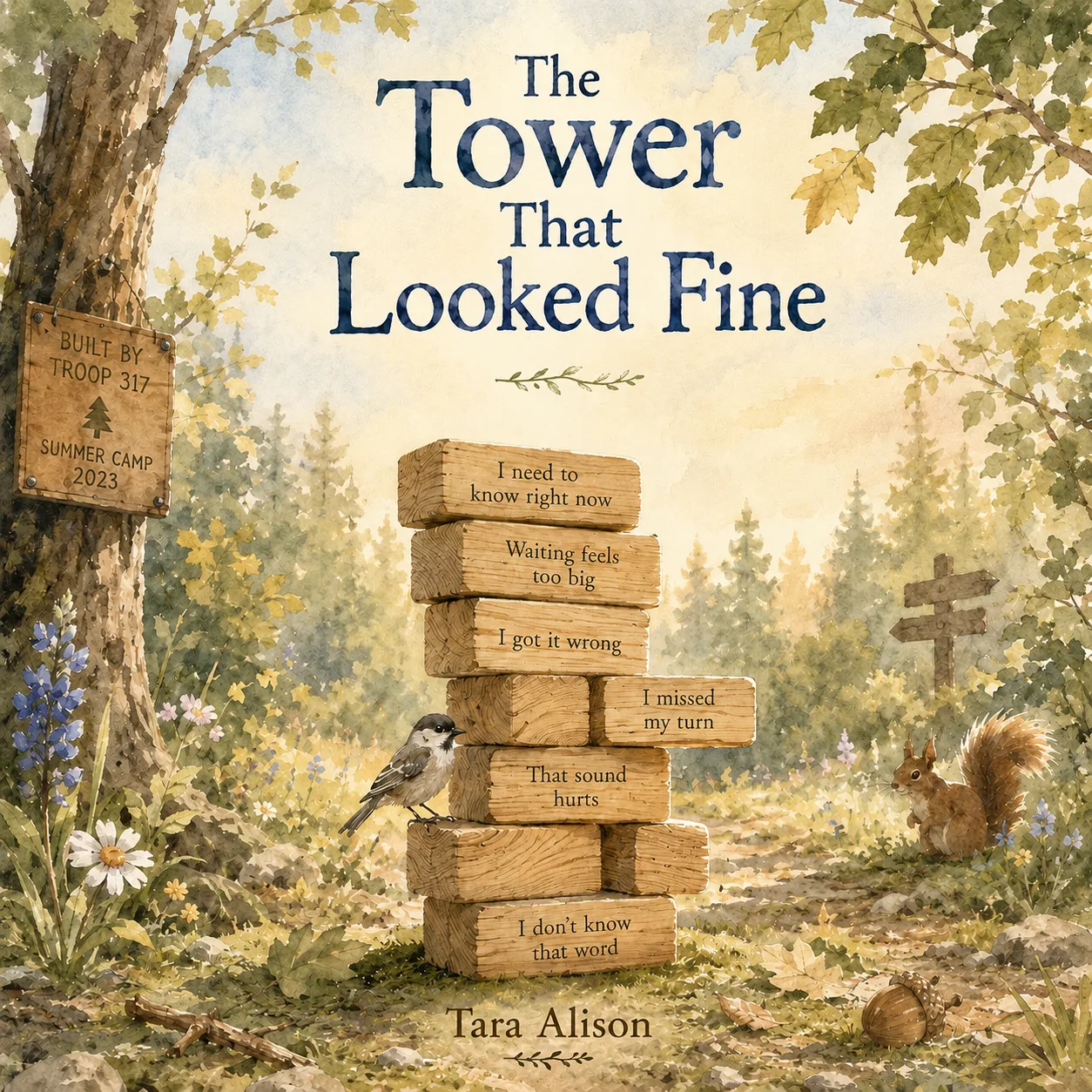 The Tower That Looked Fine
A tower in a quiet clearing tries to stay steady through every small thing nobody else seems to notice — until one tiny breath of wind causes her to fall, and a gentle hand begins to gather the blocks back.
Read the story
Researched and drafted with AI assistance, reviewed before publication. Editorial standards