.jpg)
Taking away the iPad causes huge meltdowns because the screen was holding your child's nervous system steady. When it ends, your child drops from a predictable, absorbing world into one that feels louder and more demanding, with no buffer in between. The meltdown is a lost state, not a bad choice.
The timer goes off. You say it's time to put the iPad away. And the response is not a sigh or a slumped shoulder — it's a full-body collapse. Screaming, tears, maybe a thrown cushion. For a moment you think: it's a screen. How is this the thing that breaks the day?
The size of the reaction is the clue. A meltdown this big usually isn't about the device. It's about what just happened inside your child's nervous system when the device went away.
What the Screen Was Doing
For many kids, a screen isn't just entertainment. It's a regulated state. Inside the game or the show, the world is predictable, the demands are clear, and the input is steady and absorbing. Their nervous system settles into it. It feels, to them, like the calmest place in the house.
When you take it away, you're not removing a toy. You're ending a regulated state and asking them to re-enter a world that feels louder, less predictable, and more demanding — with no buffer in between.
Why Does the End of Screen Time Hit So Hard?
A few things tend to stack at once:
The transition is abrupt. One second they're deep in something; the next, it's gone. The brain doesn't switch states that fast, and the gap comes out as distress.
They were mid-loop. Games rarely end on a clean beat. Stopping can mean abandoning a level, a build, a moment they were almost at — a real loss, not a dramatized one.
The contrast is jarring. Leaving a steady, absorbing world for an under- or over-stimulating one is a genuine jolt. The meltdown is the landing.
They're already depleted. If the screen was holding a tired or overloaded child together, removing it removes the thing that was doing the holding.
It's Not the Consequence Working
A child melting down when the iPad goes away isn't a child who needs the iPad more. It's a child whose system just lost its footing and hasn't found the next stable place to stand.
This is why "if you melt down, you lose it tomorrow too" so often fails. The meltdown isn't a choice being made. It's a state being lost. Punishing the landing doesn't make the next landing softer.
While you're here, take the guide
What's Underneath is free: the three body-state triggers under most meltdowns, what to say in the minute before it tips over, and how to reset afterward.

You'll get the guide instantly, plus five free articles in your inbox every week. Real challenges (meltdowns, school mornings, picky eating, big feelings) and how to actually handle them. Unsubscribe anytime.
What Can I Do When the iPad Has to Go?
Build a bridge, not a cliff. A heads-up — "one more round, then we're done" — lets them close the loop instead of being yanked out of it.
Land them somewhere, not nowhere. Ending a screen into an empty, demand-heavy moment is hardest. Ending it into a snack, a walk, a next thing softens the drop.
Stay regulated yourself. Your calm is the thing they borrow when theirs is gone. Matching their intensity raises the ceiling instead of lowering it.
Look at the pattern. Which transitions are worst? After how long? When tired? The "when" tells you more than the "what."
What If It Happens Every Time?
Agree on the ending before the screen starts. "Two episodes, then we eat" holds up better than "ten more minutes," because an episode is something your child can see finishing and a clock is not. If the game has no natural end, pick a save point together and name it at the start.
Give two warnings, not one. A warning at ten minutes and another at two lets your child start winding down while there is still time to finish the level. When the moment comes, say the ending once, calmly, and stay close. Repeating it louder adds pressure to a child who has already run out of room.
Plan the next ten minutes before you ask for the device. A snack on the table or a walk with you at the door gives your child somewhere to land, which does more than any rule about what happens after a meltdown.
If the same collapse shows up at other transitions too, such as leaving the park, getting dressed, or starting homework, mention it to your child's pediatrician. Difficulty shifting between activities is common with ADHD, autism, and anxiety, and a clinician can help you sort out which one you are dealing with. Long meltdowns, hitting, or running off are also reasons to ask for that conversation soon.
The Shift Worth Making
The meltdown isn't proof the screen is the enemy. It's proof the transition out of it is the hard part — and transitions are something you can scaffold. When you track when the worst ones happen, you stop bracing for a battle and start seeing a pattern you can actually work with.
Every behavior is a clue.
If the hardest moment of the day is the one when the screen goes off, LightMap can help you track the transitions around it — when they happen, after how long, and what state your child was already in — so the pattern beneath the meltdown becomes easier to see. Explore LightMap at birchandlight.com/lightmap.
For your child: But I Said "Okay" is about Owen, who means it every time he agrees to stop, and still cannot pull himself off what he is doing.
For education and reflection, not medical advice. Our terms
See what's underneath
Next time, you will know what set it off
LightMap reads your hard days together and gives you answers. Start with one moment today.
Start with 3 moments Not sure where to start? Ask me.Message Tara on WhatsApp. It really is me, I read everything and will personally respond.Click here to message Tara →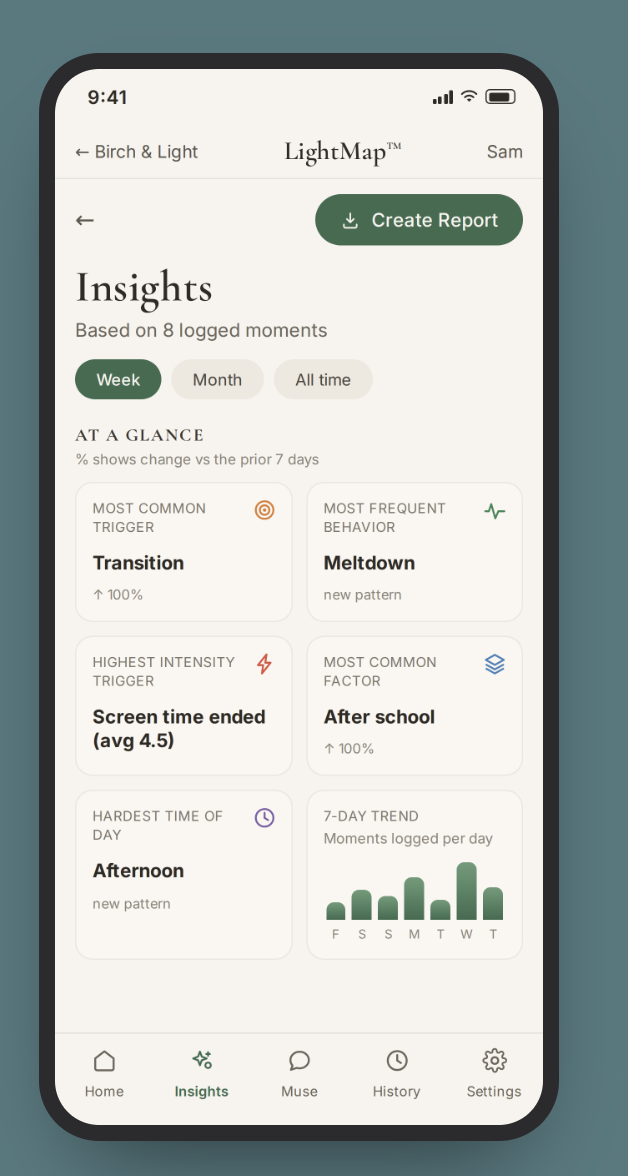

Part of the award-winning Birch & Light Method, honored with the Mom's Choice Gold Award for excellence in family resources.
A story to read together
Sometimes the easiest way in is a story you read side by side.
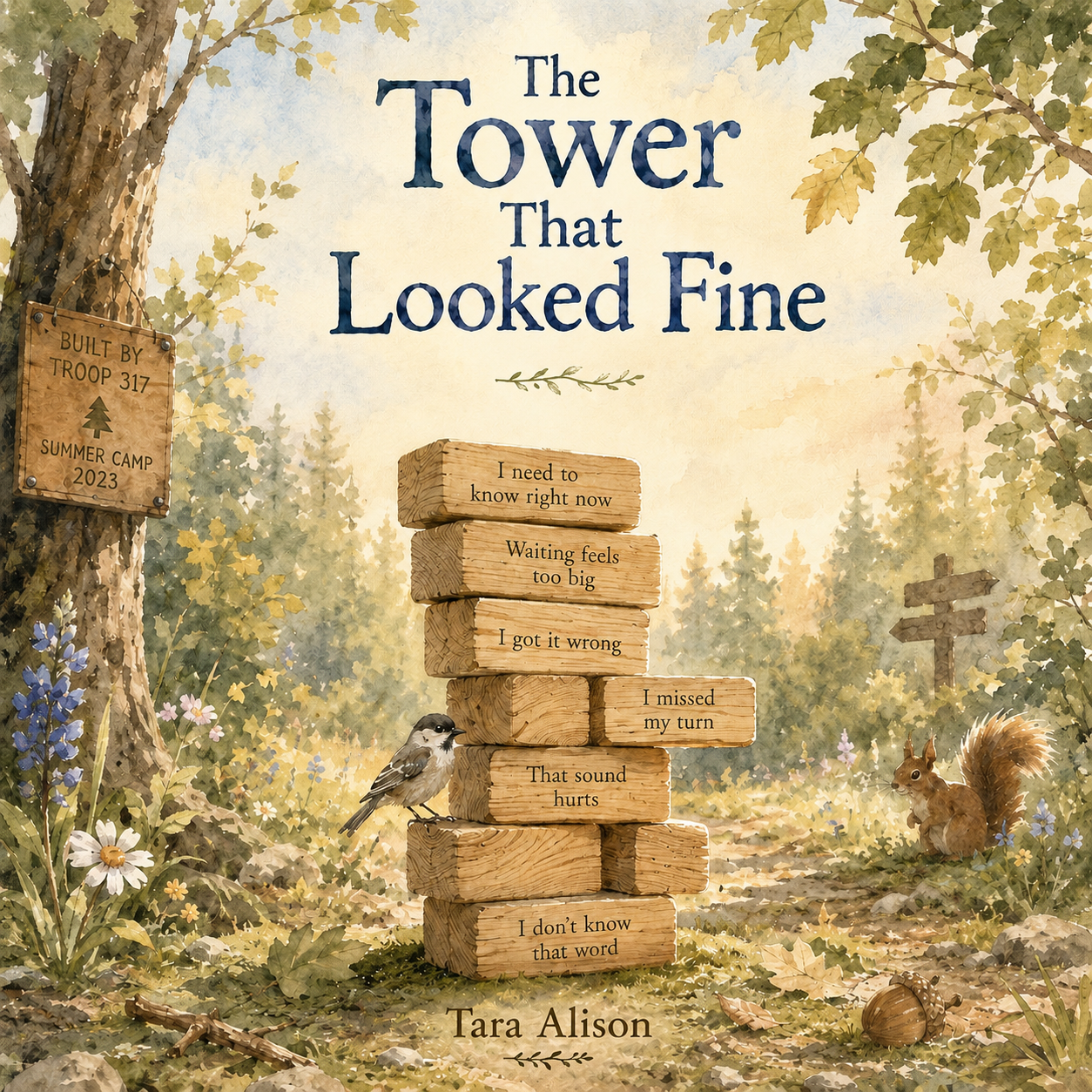 The Tower That Looked Fine
A tower in a quiet clearing tries to stay steady through every small thing nobody else seems to notice — until one tiny breath of wind causes her to fall, and a gentle hand begins to gather the blocks back.
Read the story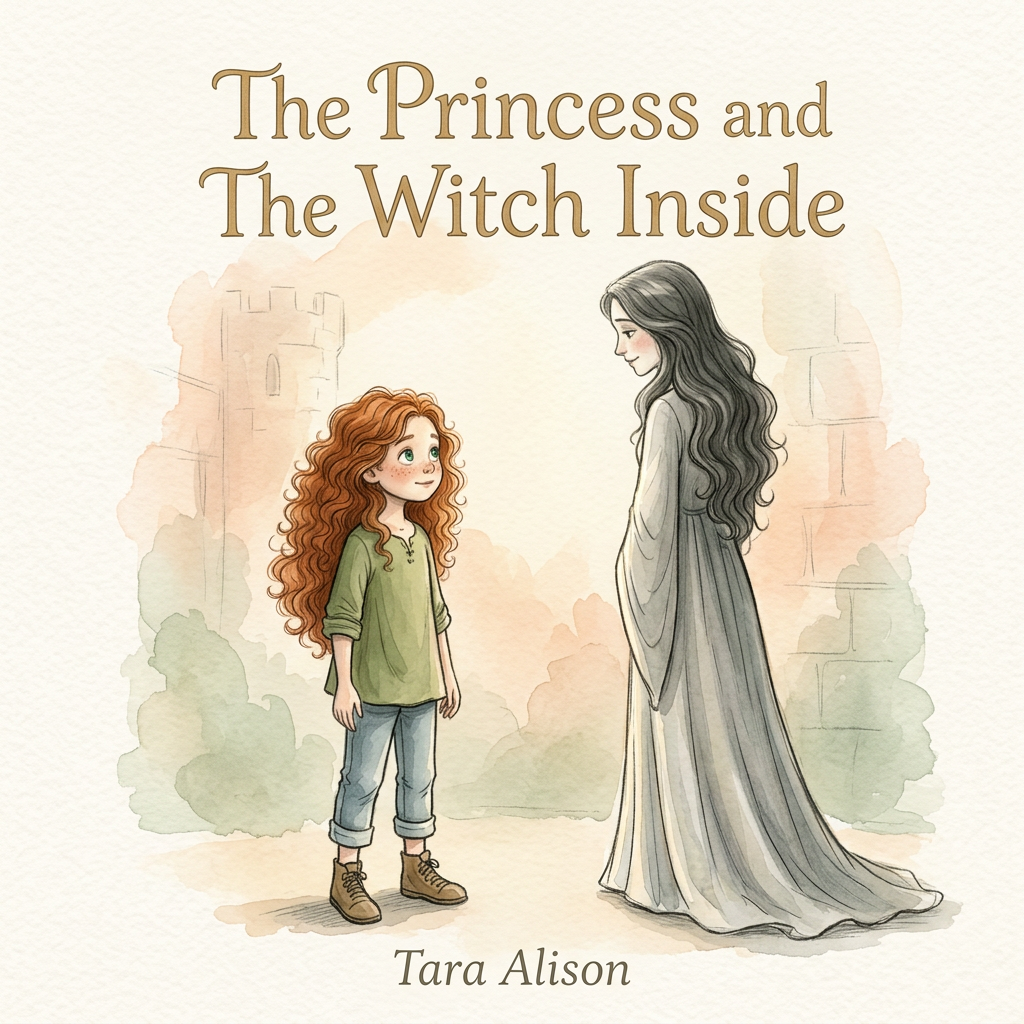 The Princess and the Witch Inside
Esme is loved, but a fast protective part keeps rushing in before she gets a turn. A quiet visitor helps her meet the witch inside — not as an enemy, but as a worried protector — and find her way back to the people she wanted to be with all along.
Read the story
If today was one of those days
A few more from the library, free to read.
Researched and drafted with AI assistance, reviewed before publication. Editorial standards