Summer is supposed to be the easy season. No early mornings, no homework, no rushing out the door, no rigid schedule. For many families it is a genuine relief — a loosening of the grip the school year holds.
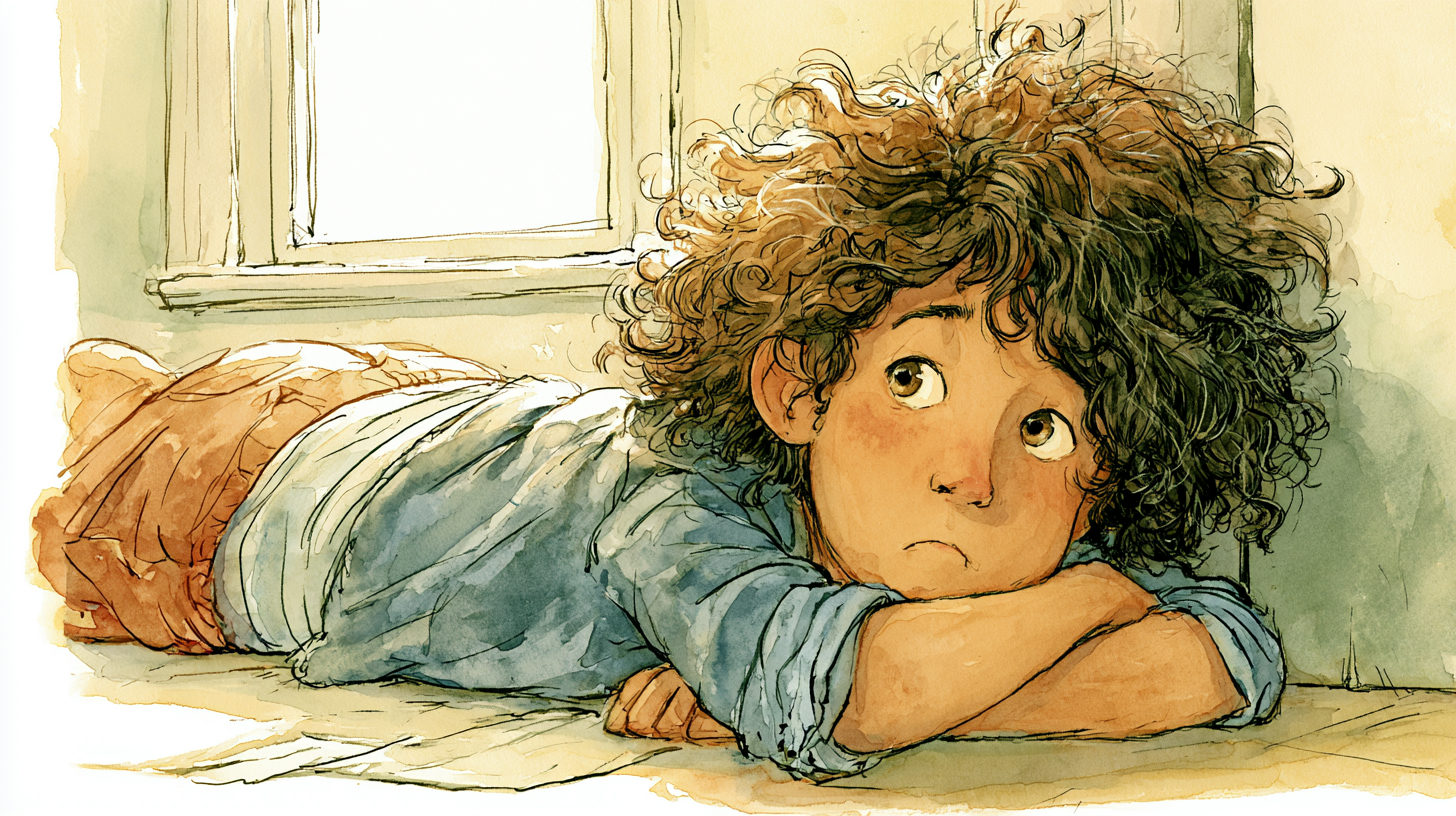
And then there are the children for whom summer is harder. Whose behavior gets worse, not better, once school ends. Who fall apart more often, melt down more easily, and seem somehow less okay during the very months that were supposed to give everyone a break. If that is your child, you may have spent more than one July wondering why the season everyone else loves is the one that undoes yours.
The answer is usually the same thing summer takes away from everyone else, experienced from the opposite direction: structure.
Why Structure Is Regulating
For a child whose nervous system struggles to regulate itself, external structure does a great deal of quiet, invisible work. A predictable schedule means the day holds few surprises, and surprises are precisely what an anxious or easily-overwhelmed system finds threatening. Knowing what comes next — what time things happen, what is expected, where to be — removes a constant, low-level demand to figure it out in real time.
The school year, for all its difficulty, provides this in abundance. Same wake time, same route, same sequence of subjects, same lunch, same pickup. Whatever else is hard about school — and for many of these children, plenty is — the shape of the day is known. And a known shape is regulating, even when its contents are demanding.
Take that shape away, and a child who relied on it more than anyone realized is suddenly navigating a vast, unstructured expanse of time with none of the scaffolding that was holding them steady.
What the Loss of Structure Actually Produces
The disregulation of summer isn't random. It tends to show up in specific, recognizable ways.
More decisions, more demand. An unstructured day is full of small open questions — what to do, when to do it, what comes next. For most children this is freedom. For a child who finds uncertainty taxing, every open question is a small demand, and a day full of them is exhausting in a way that looks, from the outside, like a child who "can't just relax."
Loss of the day's natural rhythm. The school day paces a child through activity and rest, focus and movement, in a rhythm their body comes to expect. Summer removes the metronome. Some children cannot generate that pacing for themselves yet, and without it they swing between under-stimulation and overload.
More transitions, less warning. Ironically, unstructured time often means more jarring transitions, not fewer — plans that change, outings that appear without warning, days that go in unexpected directions. For a child who needs transition time, a spontaneous summer can be a series of small ambushes.
Disrupted sleep and food rhythms. Summer loosens bedtimes, mealtimes, and routines. For a nervous system that runs close to its limits, those physical rhythms are part of what keeps it regulated. Loosen them, and there is less margin for everything else.
For some children, the freedom of summer isn't freedom. It's the removal of the very thing that was holding them together.
While you're here, take the guide
What's Underneath is free: the three body-state triggers under most meltdowns, what to say in the minute before it tips over, and how to reset afterward.

You'll get the guide instantly, plus five free articles in your inbox every week. Real challenges (meltdowns, school mornings, picky eating, big feelings) and how to actually handle them. Unsubscribe anytime.
The Trap of "Just Let Them Relax"
The well-meaning advice that surrounds summer — let them rest, let them be bored, let them have unstructured time — is genuinely good advice for many children. But for the child who is dysregulated by lack of structure, "just let them relax" can be the opposite of what helps.
What looks like a child who needs to unwind is sometimes a child who is drowning in open time and needs more scaffolding, not less. The boredom that is healthy for one child is destabilizing for another. Reading which child you have is the whole task.
What Tends to Help
Keep a loose skeleton of structure. Not a rigid schedule — summer should breathe — but a predictable shape to the day. A roughly consistent wake time, a known sequence of morning and afternoon, anchor points the child can count on. The skeleton does the regulating; the flesh of the day can stay flexible.
Make the day visible. A simple visual or spoken outline of what the day holds removes the constant uncertainty. Even "this morning we're home, after lunch we're going to the pool, then dinner" gives the nervous system something to settle into.
Protect the physical rhythms. Holding sleep and meals reasonably steady, even as everything else loosens, preserves the foundation the rest of regulation is built on.
Give transitions their warning. The same transition support that helps during the school year matters more in summer, not less, because the changes are less predictable. Heads-up, warning time, a bridge into the next thing.
Don't over-schedule in compensation. The answer to too little structure is not cramming the summer with camps and activities until there's no space at all. That swings a child from under-stimulation to overload. The goal is a predictable, gently-shaped day with room in it — not a packed one.
The Shift Worth Making
If your child is harder in summer, it is not because they are ungrateful for the break or incapable of enjoying free time. It is, very often, because the structure that was quietly regulating them disappeared — and no one, including them, fully realized how much they were leaning on it.
Seen that way, the fix isn't to push them to relax or to fill every hour. It's to give back, gently, the predictable shape their nervous system was using to stay steady. The freedom of summer is real. Some children just need a little structure inside it to be able to enjoy it.
Every behavior is a clue.
If your child comes undone over the summer, LightMap can help you track what shifts when the structure does — which parts of the unstructured day are hardest, and what helps — so the pattern beneath it becomes easier to see. Explore LightMap at birchandlight.com/lightmap.
For education and reflection, not medical advice. Our terms
See what's underneath
Next time, you will know what set it off
LightMap reads your hard days together and gives you answers. Start with one moment today.
Start with 3 moments Not sure where to start? Ask me.Message Tara on WhatsApp. It really is me, I read everything and will personally respond.Click here to message Tara →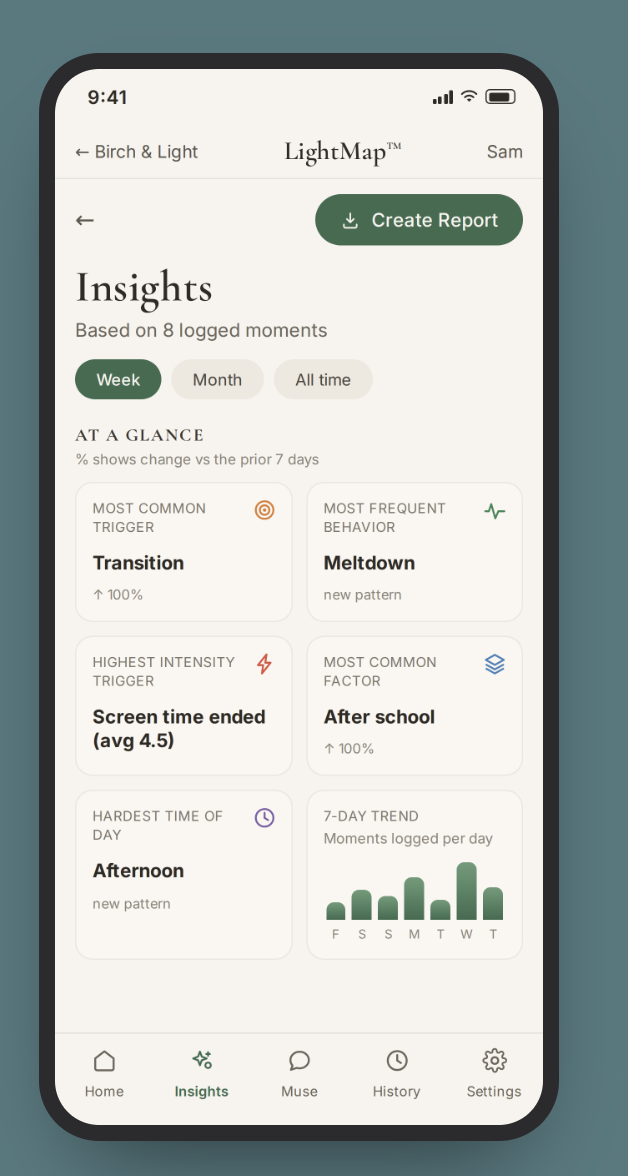

Part of the award-winning Birch & Light Method, honored with the Mom's Choice Gold Award for excellence in family resources.
A story to read together
Sometimes the easiest way in is a story you read side by side.
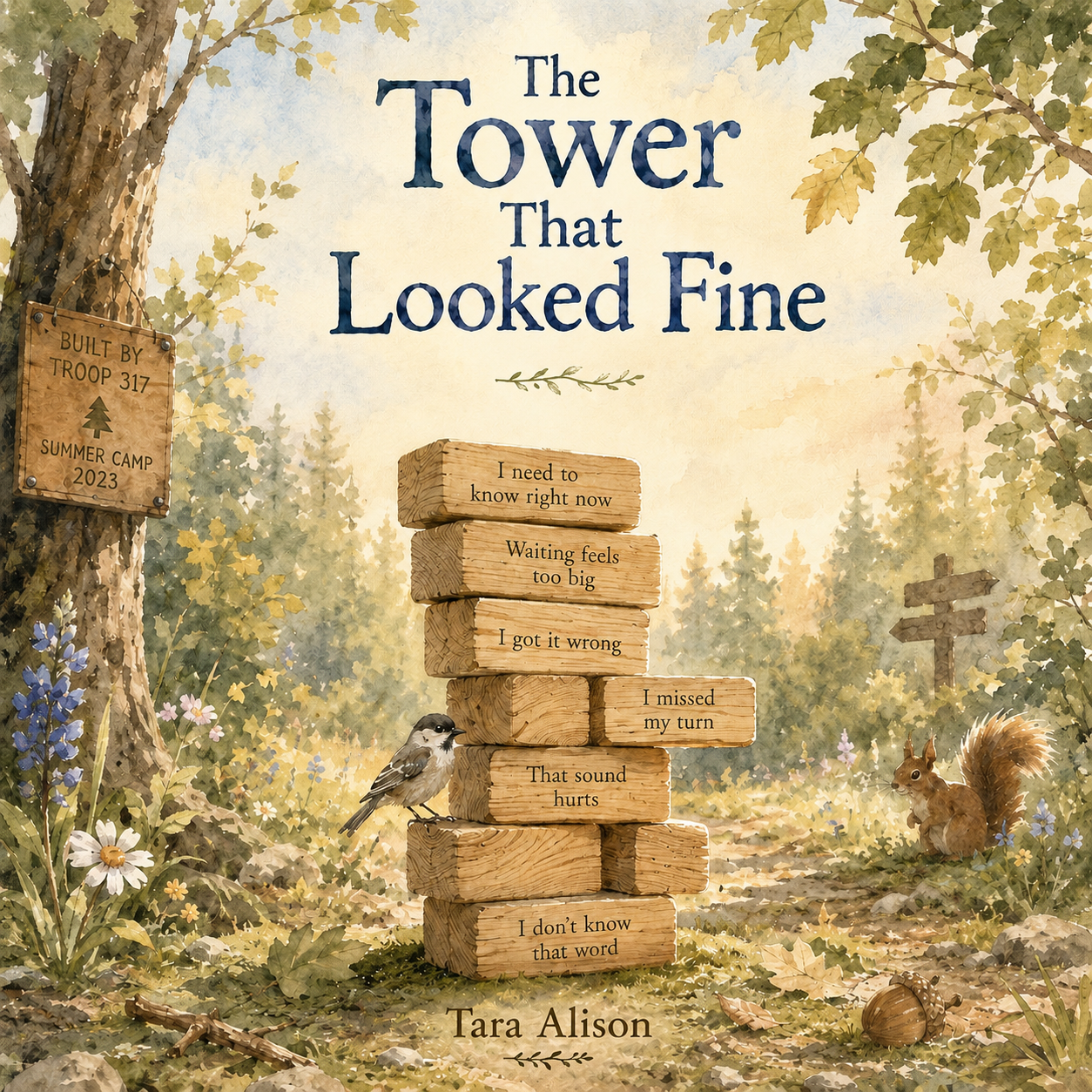 The Tower That Looked Fine
A tower in a quiet clearing tries to stay steady through every small thing nobody else seems to notice — until one tiny breath of wind causes her to fall, and a gentle hand begins to gather the blocks back.
Read the story The Princess and the Witch Inside
Esme is loved, but a fast protective part keeps rushing in before she gets a turn. A quiet visitor helps her meet the witch inside — not as an enemy, but as a worried protector — and find her way back to the people she wanted to be with all along.
Read the story
If today was one of those days
A few more from the library, free to read.
Researched and drafted with AI assistance, reviewed before publication. Editorial standards