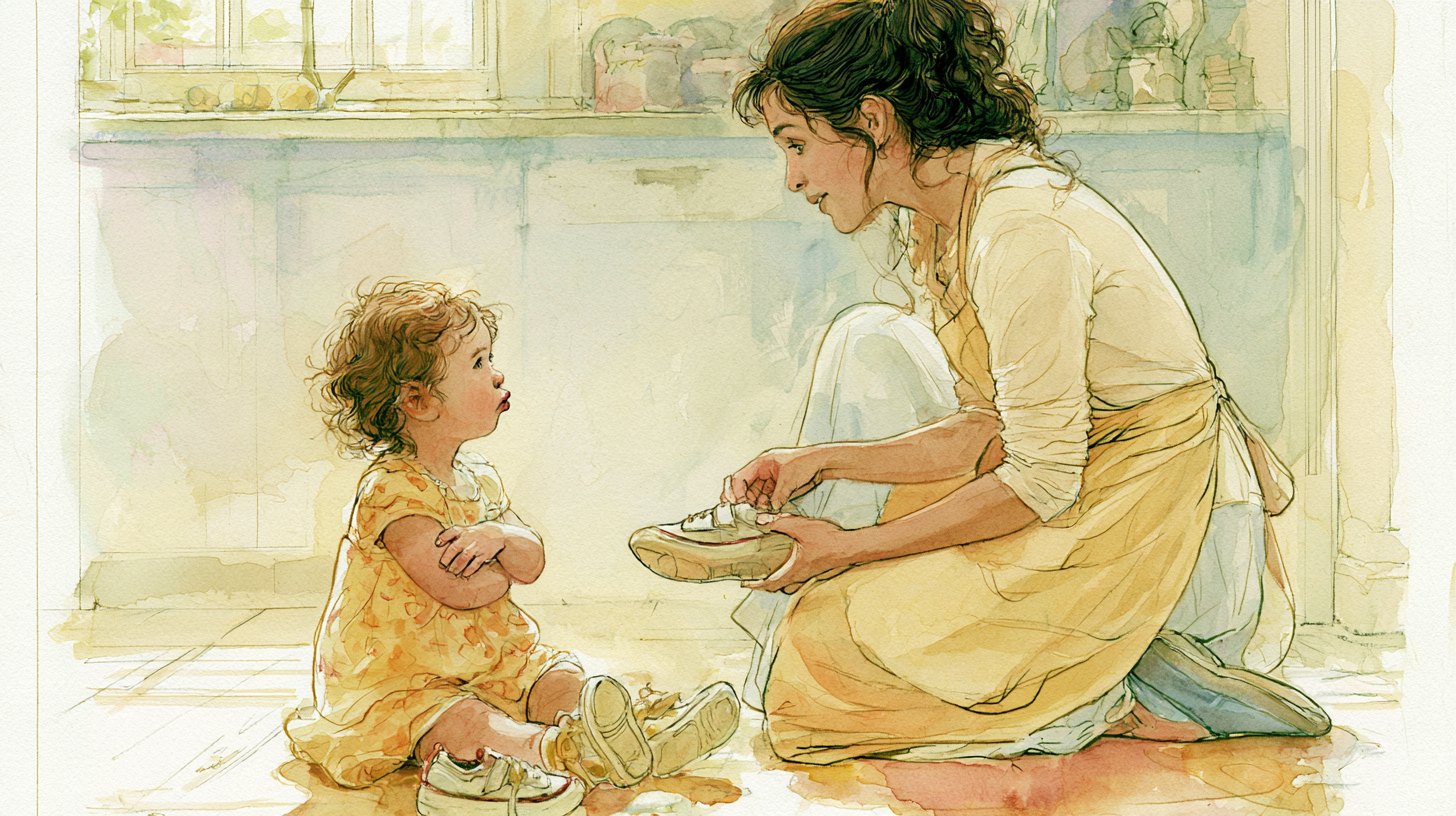
Last month your toddler said "uh-oh" and waved at the mailman. This month they say "NO" to the car seat, the bath, the sippy cup and the blue shirt they picked out themselves. If you're wondering what happened to your sweet baby, here's the short answer: the terrible twos are a normal stage, they usually show up somewhere between 18 and 30 months, and they're a sign your child is growing, not a sign something is wrong with them or with you.
What are the terrible twos?
The terrible twos are the stretch of toddlerhood when your child starts testing limits, saying no to almost everything, and feeling every feeling at full volume. Despite the name, they don't start on a birthday. Many families see the first signs around 18 months, and plenty of three-year-olds are still in it.
Three things are happening at once:
- Independence is switching on. Your child has figured out they're a separate person with their own opinions, and they want to use them.
- Language is behind. The CDC milestone for 2 years is putting two words together, like "more milk." That's a big gap between what a two-year-old wants to say and what they can say.
- The brakes aren't built yet. The part of the brain that helps us pause, wait and calm down is still years from finished. A toddler feels the frustration before they have any way to manage it.
Put those together and you get a small person with big wants, few words and no brakes. That's the terrible twos.
What does normal look like at this age?
- Saying "no" to things they wanted a minute ago
- Tantrums when they're tired, hungry, rushed or told no
- Hitting, biting or throwing when frustrated, especially before they have the words
- Wanting to do it "MYSELF," then melting down when they can't
- Clinging to you one minute and running away the next
- Picky eating that changes by the day
None of these on their own means anything is wrong. Our article on temper tantrums: what's normal and what helps goes deeper into how long tantrums usually last and what to do in the middle of one.
How do I survive the terrible twos?
- Give choices you can live with. "Red cup or green cup?" "Do you want to walk to the car or hop like a bunny?" A two-year-old who gets to choose something fights less about everything else.
- Say what to do, not what not to do. "Feet on the floor" lands better than "Don't climb." Toddlers hear the action word, so give them the right one.
- Warn before every change. "Two more slides, then shoes." Transitions are where most two-year-old battles start. A warning, a song or a timer gives them a running start.
- Protect sleep and snacks. A tired or hungry toddler has nothing left. Many terrible-twos meltdowns are really a nap problem or a snack problem.
- Catch them being good. Notice the moments they share, wait or use their words, and say it out loud. Attention is the reward they want most.
- Name the feeling. "You're so mad the bath is over." You're handing them the words they don't have yet, and words are what eventually replace the screaming.
- Hold the line calmly. If no means no, keep it no, even when it gets loud. Giving in to a tantrum teaches that tantrums work.
- Skip the spanking. Hitting a toddler for hitting teaches that hitting is how big people handle anger. Calm, consistent limits do the teaching instead.
While you're here, take the guide
What's Underneath is free: the three body-state triggers under most meltdowns, what to say in the minute before it tips over, and how to reset afterward.
You'll get the guide instantly, plus five free articles in your inbox every week. Real challenges (meltdowns, school mornings, picky eating, big feelings) and how to actually handle them. Unsubscribe anytime.
There's a story for this exact struggle
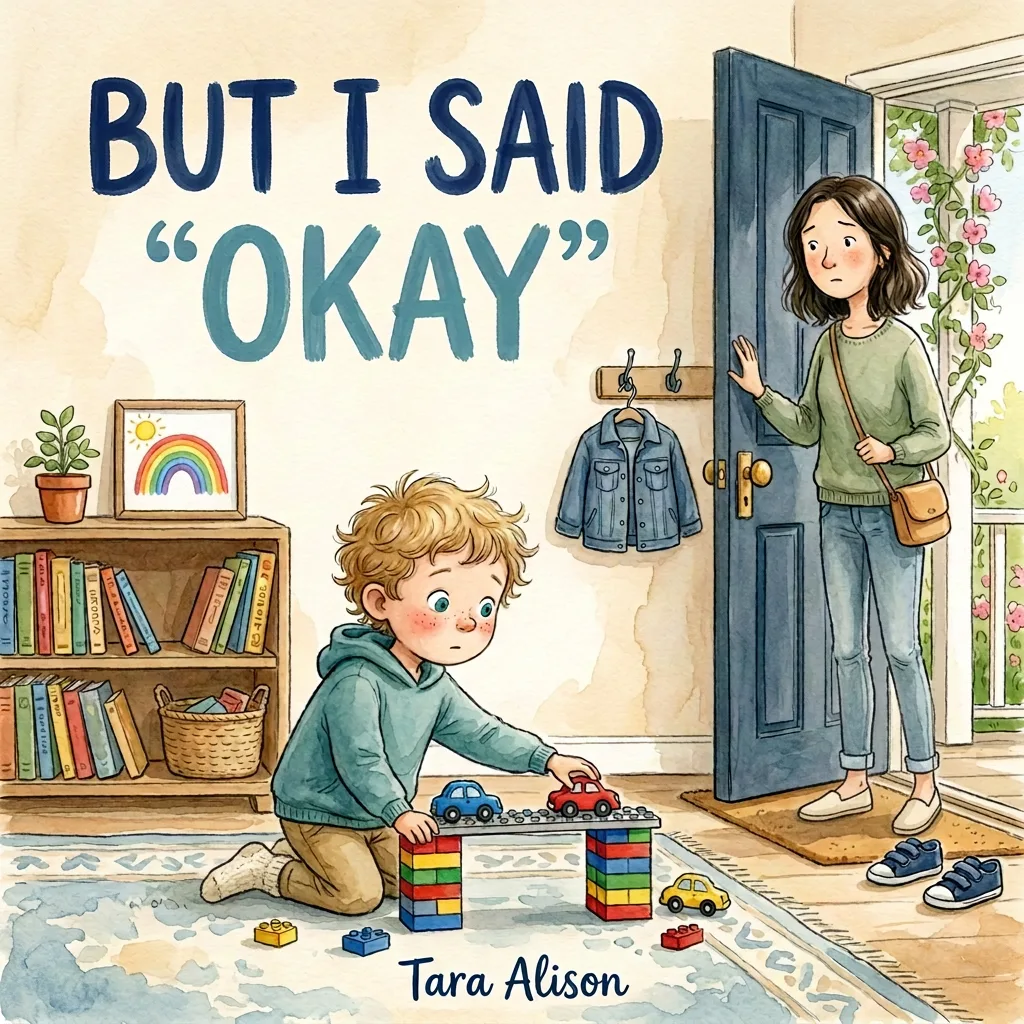
But I Said “Okay”
Owen always says okay. He means it every time. But his attention is still inside the bridge, the dragon, the cave, the music — until Mom realizes that helping him leave one thing matters more than asking him to start the next.
Free to read. You'll also get five free articles a week. Unsubscribe anytime.
When do the terrible twos end?
For most children, things ease up as language catches up. Somewhere between three and four, many children can say "I'm mad" instead of showing you. Tantrums get shorter and less frequent. Some families find age three harder than two (people call it the "threenager" stage), but the overall direction is toward calmer.
When is it more than the terrible twos?
Talk to your pediatrician if you notice any of these:
- Your child has lost words or skills they used to have
- They aren't putting two words together by about 2
- They rarely look at you, point to show you things, or respond to their name
- Tantrums are long, very frequent or getting worse after age 3 or 4
- They often hurt themselves or others during meltdowns
- A big change in behavior came on suddenly, especially after an illness
None of these is a diagnosis. They're reasons to ask a few more questions. At the 2-year visit, the American Academy of Pediatrics recommends autism screening for every child, so it's a good time to bring up anything that's been on your mind. If you're worried about development, you don't need a referral to ask your state's early intervention program for a free evaluation.
What's behind your toddler's hardest moments?
Two-year-olds can't tell you why they fell apart, but their days usually can. Jot down when the meltdown happened, what came right before, and how they slept and ate. Within a week or two you'll often see it: the 4 p.m. crash, the transition with no warning, the morning after a short nap. Our story But I Said Okay was written for those moments when a child agrees to something and then falls apart anyway.
This is what LightMap was built for. Log the hard moments, even a little at a time, and LightMap uncovers what is driving them, coaches you on how to handle each one, and shows you which hours of your day need the plan. Start free at LightMap.
The terrible twos are loud, exhausting and very temporary. Your child isn't giving you a hard time. They're having a hard time, and every calm "I'm here" teaches them how to come back down.
Start here
Find out what's really going on
The quiz points you toward what's driving it and what tends to help.
Take the quizOr get a free 15 minute LightMap Analysis with TaraFree. No card. 15 minutes.
 Not sure where to start? Ask me.Message Tara on WhatsApp. It really is me, I read everything and will personally respond.Click here to message Tara →

Part of the award-winning Birch & Light Method, honored with the Mom's Choice Gold Award for excellence in family resources.
Sources
Sources: Centers for Disease Control and Prevention, Learn the Signs. Act Early. "Milestones in Action: By 2 Years." Cleveland Clinic Health Essentials. "Surviving the Terrible Twos: Tips and Tricks."
For education and reflection, not medical advice. Our terms
A story to read together
Sometimes the easiest way in is a story you read side by side.
- But I Said “Okay”
Owen always says okay. He means it every time. But his attention is still inside the bridge, the dragon, the cave, the music — until Mom realizes that helping him leave one thing matters more than asking him to start the next.
Read the story 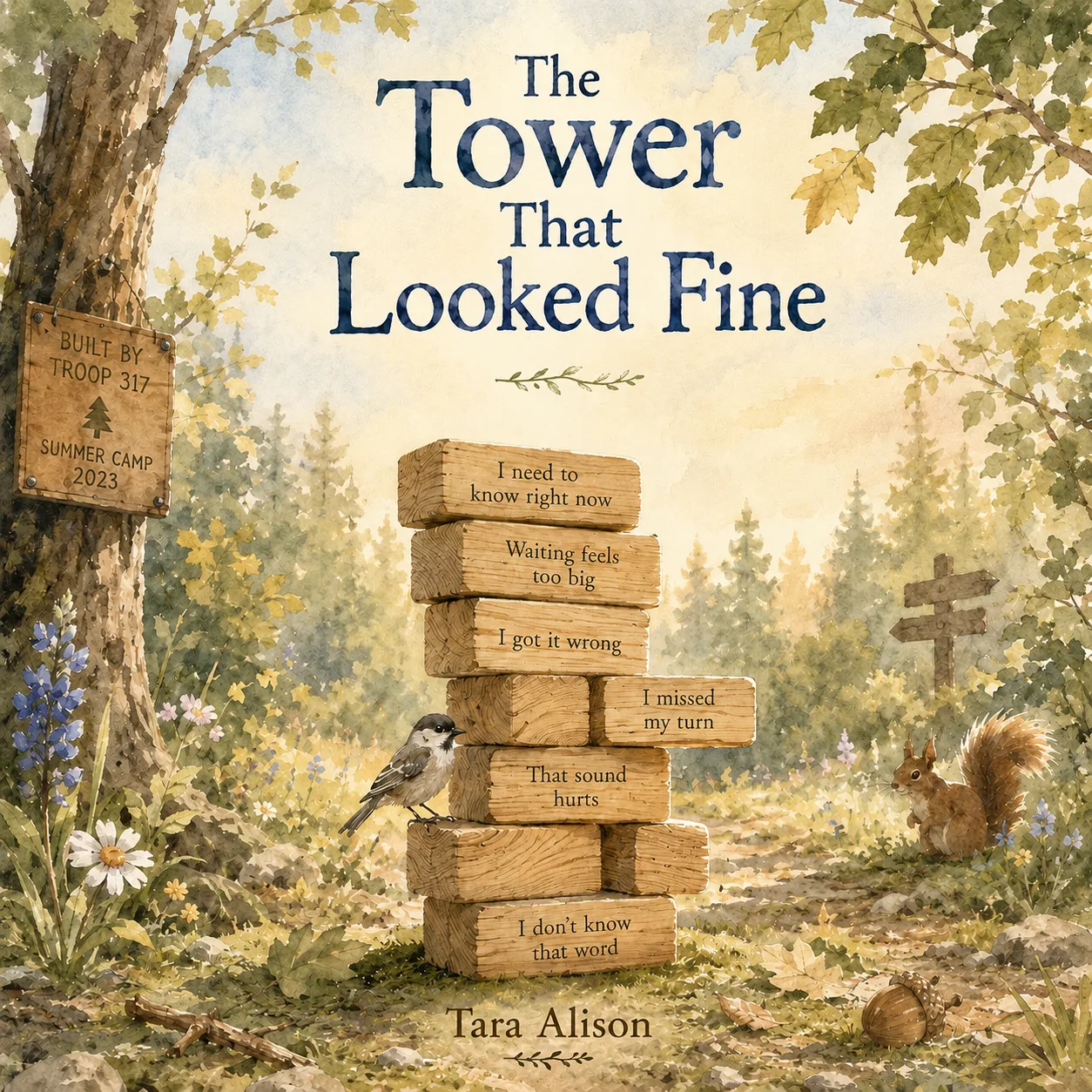 The Tower That Looked Fine
A tower in a quiet clearing tries to stay steady through every small thing nobody else seems to notice — until one tiny breath of wind causes her to fall, and a gentle hand begins to gather the blocks back.
Read the story
Researched and drafted with AI assistance, reviewed before publication. Editorial standards